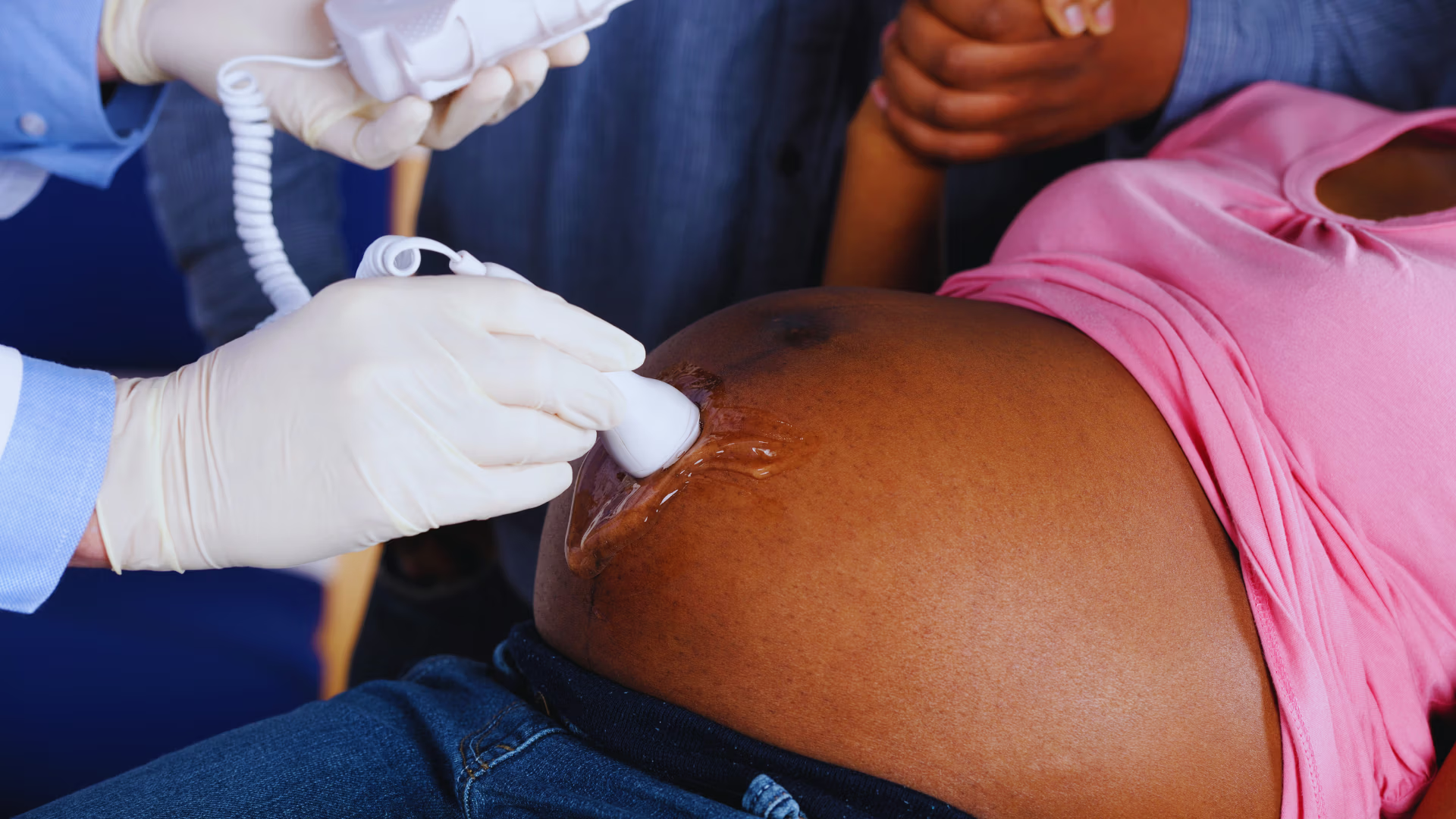
Female fertility is a complex interplay of hormones, ovulation, reproductive anatomy, and overall health. When conception does not occur after 12 months of regular unprotected intercourse (or after 6 months for women over 35), fertility investigations help uncover the underlying cause and guide the most effective treatment plan.
At Viva Fertility Clinic, we believe in compassionate, evidence‑based care. Understanding the tests involved empowers women to take informed steps toward achieving pregnancy.
Female fertility depends on several key factors:
Regular ovulation
Healthy fallopian tubes
A receptive uterus
Balanced reproductive hormones
Adequate ovarian reserve
Any disruption in these areas can affect the ability to conceive. Investigations help identify issues early and improve treatment outcomes.
At Viva Fertility Clinic, we recommend initial examination of Male Fertility Tests first before Female Fertility Tests.
The Day 2 – Day 3 Hormone Profile Test evaluates key hormones that are integral to a woman's reproductive cycle. Understanding the delicate balance of these hormones is crucial in assessing female fertility. These hormones include:
Follicle-Stimulating Hormone (FSH): Essential for stimulating the growth and maturation of ovarian follicles, each containing an egg.
Luteinizing Hormone (LH): Plays a pivotal role in triggering the release of a mature egg from the ovary.
Estradiol (E2): A form of estrogen that promotes the thickening of the uterine lining, preparing it for potential implantation.
Prolactin: An essential hormone for lactation. However, elevated levels of prolactin (hyperprolactinemia) can impede ovulation, disrupt menstrual cycles, and prevent implantation. Maintaining balanced prolactin value is essential for a successful IVF outcome.
Thyroid Stimulating Hormone (TSH): An essential hormone for optimal thyroid gland function. Elevated levels of TSH can lead to menstrual irregularities, ovulatory dysfunction, and reduced IVF success rate.
Optimal Timing for Testing:
To ensure the most accurate hormone measurements, this test should be conducted on day 2 or day 3 of your menstrual cycle.
How is this Test Conducted?
A small blood sample, approximately 2ml – 3ml, is drawn during the specified window of your cycle to assess the levels of these hormones.
Purpose of the Test:
The results offer valuable insights into your ovarian function and reserve. They also help predict your response to ovarian stimulation medications if such treatment becomes necessary. This test is a vital tool in fertility evaluations, guiding personalized treatment plans for optimal outcomes.
The AMH test measures the number of remaining egg follicles in a woman’s ovaries and helps predict how well she may respond to ovarian stimulation during fertility treatment. Higher AMH levels generally indicate a better expected response to Controlled Ovarian Stimulation (COS).
Correlation with Age: AMH levels are closely linked to a woman’s age. Women over 35 typically show lower AMH values, which may indicate diminished ovarian reserve and reduced responsiveness — or even non‑responsiveness — to ovarian stimulation medications.
What is the timing for this test? The AMH test has the advantage of not being cycle‑dependent, allowing flexibility in scheduling. However, for optimal consistency, it is recommended to perform the test between Day 2 and Day 7 of the menstrual cycle.
How is this test done? The test requires a small blood sample, usually between 2 ml and 3 ml, to accurately measure AMH levels.
The Day 21 Progesterone (Ovulation) Test is a blood test used to confirm whether ovulation has occurred.
It is typically performed on Day 21 of a 28‑day cycle, when progesterone levels should be at their peak.
For women with irregular cycles, the test may be paired with additional hormonal evaluations to provide a more complete picture of ovulatory function.
A transvaginal ultrasound provides detailed images of the reproductive organs.
It assesses:
Uterus – fibroids, polyps, congenital abnormalities
Ovaries – cysts, polycystic ovary syndrome (PCOS)
Endometrial lining – thickness and pattern
Antral follicle count (AFC) – an important measure of ovarian reserve
Ultrasound is a cornerstone of female fertility evaluation.
The Hysterosalpingogram (HSG) is a specialized radiological procedure that provides a detailed, image‑based evaluation of a woman’s reproductive health. This test is primarily used to determine:
Important Consideration
At Viva Fertility Clinic, we typically recommend conducting a semen analysis for the husband or male partner first, to rule out male‑factor infertility before proceeding with the HSG test.
Optimal Timing for HSG
To ensure accuracy and safety, the HSG procedure is scheduled after menstruation and before ovulation—specifically between cycle days 5 and 10. This timing helps avoid disrupting a potentially implanting embryo.
How Is This Test Done?
The procedure involves gently passing a small catheter through the cervix into the lower part of the uterine cavity. A radiopaque contrast fluid is then injected through the catheter to fill the cavity. As the fluid flows through the uterus and fallopian tubes, a series of X‑ray images is taken to visualize the reproductive structures.
Sono‑HSG is an ultrasound‑based alternative to HSG that uses saline or water to fill the uterine cavity, allowing clinicians to assess
It offers key advantages, including no radiation exposure, better visualization of pelvic structures, and reduced discomfort.
When Can I Do This Test?
The test is performed between cycle days 5 and 10 and takes about 10–20 minutes
How Is This Procedure Done?
It involves inserting a small catheter trans-cervically into the lower part of the uterine cavity and injecting either water or normal saline through the catheter to fill the uterine cavity. A video image of the fluid's movement is then captured with ultrasound.
A minimally invasive procedure where a small camera is inserted into the uterus.
It helps diagnose and treat:
Polyps
Fibroids
Scar tissue (Asherman’s syndrome)
Uterine septum
Hysteroscopy is often recommended when ultrasound or HSG suggests abnormalities.
Tests may include:
Cervical swabs for infections
Pap smear (if due)
Screening for STIs such as chlamydia or gonorrhoea
Untreated infections can affect fertility and pregnancy outcomes.
In addition, several routine assessment tests are essential for overall health and fertility. They include:
• Blood Group and Rh Factor: Determining blood type and Rh factor helps assess compatibility between partners and identify potential risks during pregnancy.
• Genotype: Genotype testing identifies genetic variations that may affect fertility or reveal inherited conditions.
• Random Blood Sugar: Monitoring blood glucose levels supports overall health and helps detect or manage conditions such as diabetes.
• Anti‑HIV and Anti‑HCV: Screening for HIV and hepatitis C is crucial for the well‑being of both partners and for safe fertility treatment.
• VDRL (Venereal Disease Research Laboratory): This test detects syphilis, a sexually transmitted infection that can impact fertility and pregnancy outcomes.
• HBsAg (Hepatitis B Surface Antigen): Screening for hepatitis B helps prevent transmission and supports safe reproductive care.
Once investigations are complete, your specialist will discuss:
Identified causes of infertility
Treatment options such as ovulation induction, IUI, IVF, or surgery
Lifestyle modifications to improve fertility
Timelines and success expectations
At Viva Fertility Clinic, we tailor every treatment plan to the woman’s age, diagnosis, and personal goals.
Conclusion
Female fertility investigations provide essential insight into reproductive health and are a vital first step in the journey toward conception. With accurate diagnosis and personalized care, many women achieve successful pregnancies — even after years of difficulty.
At Viva Fertility Clinic, we are committed to guiding you with expertise, empathy, and hope.
If you’re travelling from outside Abuja, Nigeria. Consider booking morning appointment allows you to complete your fertility work‑up on the same day, saving you time and reducing the need for multiple trips.
Female fertility investigations provide essential insight into reproductive health and are a vital first step in the journey toward conception. With accurate diagnosis and personalized care, many women achieve successful pregnancies — even after years of difficulty.
At Viva Fertility Clinic, we are committed to guiding you with expertise, empathy, and hope.
+234166542222
Plot 33 Janet Duniya Street, Apo 900104, Abuja, Nigeria
We provides a full range of Medically Assisted Reproductive (MAR) and Preimplantation Genetic Testing (PGT) services tailored to support individuals and couples throughout every step of their reproductive journey.
We blend cutting‑edge assisted reproductive technologies with compassionate and personalized care to help patients achieve their dream of becoming parents.
Every patient’s story matters to us, and we strive to make their journey as supportive, transparent, and successful as possible.

We are committed to delivering safe, high‑quality, and effective medically assisted reproductive and preimplantation genetic testing services that maximize our patients’ chances of success in the shortest possible time.

We use cookies to improve your experience on our site. By using our site, you consent to cookies.
Manage your cookie preferences below:
Essential cookies enable basic functions and are necessary for the proper function of the website.
These cookies are needed for adding comments on this website.
Google Tag Manager simplifies the management of marketing tags on your website without code changes.
Statistics cookies collect information anonymously. This information helps us understand how visitors use our website.
Google Analytics is a powerful tool that tracks and analyzes website traffic for informed marketing decisions.
Service URL: policies.google.com (opens in a new window)
Google reCAPTCHA helps protect websites from spam and abuse by verifying user interactions through challenges.
You can find more information in our Cookie Policy and .

Enjoy special savings on select IVF treatment packages, available until 31st January 2027 — start your journey to parenthood today!